


Stock vs Custom Glass Bottles: Which Is Better for Growing Brands?
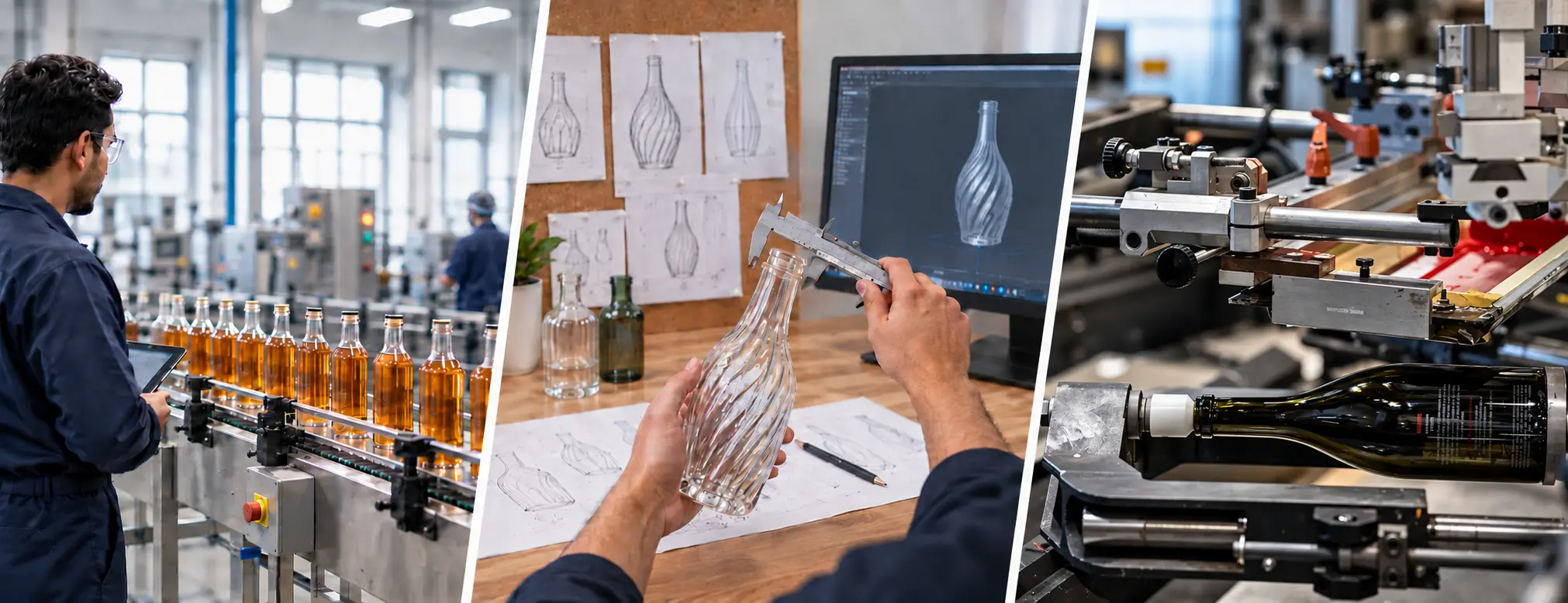
For a growing brand, packaging is rarely just packaging.
A bottle or jar can influence how a customer sees your product before they ever try it. It can communicate whether a product feels premium, practical, natural, modern, or made for everyday use.
That is why many startups and D2C brands eventually face an important question: Should we choose a stock glass bottle or invest in a custom glass bottle?
The answer depends less on which option is “better” and more on where your brand is in its growth journey.
A startup testing its first product may need speed and flexibility. An established manufacturer launching a flagship product may need a distinctive shape that competitors cannot easily replicate.
Understanding the difference can help you avoid spending too much on packaging too early or choosing packaging that limits your brand later.
What Are Stock Glass Bottles?
Stock glass bottles are existing bottle designs that are already available from a glass packaging supplier. They are produced using existing moulds, so brands do not need to develop a completely new bottle from scratch.
This makes stock packaging particularly useful for startups, D2C brands, and manufacturers that want to bring a product to market without taking on the additional investment involved in developing a new mould.
For example, a brand launching cooking oil, sauce, juice, perfume, cosmetics, or another consumer product may be able to select an existing bottle shape and then build its visual identity through labels, closures, colors, printing, or other finishing options.
A supplier such as Chaudhary Glasspack offers a broad selection of bottles and jars for industries including food and beverages, cosmetics, perfumes, pharmaceuticals, and other applications.
What Are Custom Glass Bottles?
Custom glass bottles are developed specifically around a brand’s requirements. Instead of selecting an existing shape, the brand works with a packaging supplier to develop a new design.
This can involve creating technical drawings, 3D visualisations, mockups, sample moulds, and final production samples before full-scale manufacturing begins.
Chaudhary Glasspack’s custom design process, for example, includes understanding the product requirements, preparing technical drawings and 3D images, developing an acrylic mockup, creating sample moulds, obtaining sample approval, and moving into final production.
The result is packaging that can be designed around a brand rather than forcing the brand to work around an existing bottle.
But that additional flexibility also means more planning, development, and investment.
Stock vs Custom Glass Bottles: The Key Differences
The easiest way to make the decision is to look at what matters most to your business.
- Upfront Investment
Stock bottles generally have a simpler cost structure because the mould already exists.
Custom bottles may involve tooling and development costs before the first large production run. The economics become more attractive when a brand has sufficient volume to spread those development costs across a larger number of bottles.
For a young brand still testing its market, committing significant funds to a proprietary bottle can therefore introduce unnecessary risk. - Speed to Market
This is one of the biggest advantages of stock glass bottles.
Ready stock availability of bottles or jars makes GTM quicker and nimbler. It cuts down time, allowing the brands to move directly toward sampling, purchasing, labeling, filling, and launching. Exact lead times depend on availability, decoration, quantity, and supplier capabilities, but industry packaging guidance consistently identifies existing stock formats as faster to bring to market than newly tooled bottles.
Custom bottles require additional stages such as design approval, mould development, sampling, testing, and production.
If your launch date is approaching, a stock bottle can give you considerably more flexibility. - Brand Differentiation
This is where custom glass bottles have a clear role.
A stock bottle may be shared by multiple brands. Your differentiation therefore comes from the label, closure, decoration, color, typography, and overall packaging system.
A custom bottle allows the physical shape itself to become part of your brand identity.
Think about a bottle with a distinctive silhouette that customers can recognize even before they see the label. For a successful product, that physical recognition can become a valuable brand asset. - Minimum Order Quantities
MOQ—or minimum order quantity—is an important consideration for growing brands.
Stock packaging can often provide greater flexibility because the bottle is already part of a supplier’s existing range. However, the actual MOQ depends on the bottle, supplier, finish, decoration, packaging configuration, and order volume.
Custom packaging generally requires stronger volume planning because mould development and production need to be commercially viable.
This is why brands should ask about MOQ, tooling costs, sampling costs, production lead time, and reorder requirements before choosing a packaging route.
There Is a Third Option: Customized Stock Bottles
The choice does not always have to be stock or completely custom. Start-up or growing brands can also start with an existing glass bottle and customize the elements around it.
A stock bottle can be customized by :
- Adding a distinctive label
- Customized printing
- Choosing a unique closure
- Frosting or other surface finishes
- Brand-specific colors
- Custom secondary packaging
This approach can create a strong visual identity without requiring the brand to immediately develop a proprietary mould.
For many emerging brands, this can be a practical bridge between a basic stock bottle and a fully custom packaging solution.
When Should a Growing Brand Choose Stock Glass Bottles?
Stock bottles may make sense when:
You are launching a new product.
You may not yet know which size, format, or packaging configuration customers will prefer.
You need to launch quickly.
An existing bottle eliminates several stages of packaging development.
You are testing demand.
It can be more practical to validate the product before investing heavily in proprietary packaging.
You have multiple SKUs.
Using existing bottle formats can make it easier to introduce different sizes or products within a consistent packaging family.
When Should You Consider Custom Glass Bottles?
Custom packaging becomes more relevant when the bottle itself is an important part of your brand strategy.
You may want a custom solution when:
Your product has established demand.
A proven product provides more confidence for a larger packaging investment.
Shelf differentiation is critical.
A distinctive bottle can help your product stand apart from similar products.
Packaging is part of your premium positioning.
For luxury food, beverages, perfumes, cosmetics, and specialty products, the container can contribute significantly to perceived value.
You want a proprietary shape.
If the bottle silhouette is central to your identity, custom mould development may be worth considering.
So, Which Is Better for a Growing Brand?
There is no single answer to this question. For an early-stage D2C brand, stock glass bottles can provide speed, flexibility, and a lower barrier to testing the market.
For a growing manufacturer with predictable demand and a strong packaging strategy, custom glass bottles can provide greater differentiation and long-term brand ownership.
The smartest decision is often to think about packaging in stages.
Your packaging choice should be driven by what helps your product reach customers efficiently. Learn from the market. Understand your volumes. Build demand. Then, when the numbers and brand strategy support it, consider moving toward a more customized packaging solution.
The right glass bottle is not simply the one that looks the best.
It is the one that fits your product, production requirements, budget, order volume, brand positioning, and growth plans.
Choosing the Right Glass Bottle Supplier
Whether you choose stock or custom packaging, the choice of supplier is crucial to your success.
You need to look beyond the catalogue and glass bottle samples. Query about product specifications, quality standards, MOQ, customization options, sampling, production timelines, logistics, and repeat-order consistency.
Chaudhary Glasspack works with businesses across sectors including food and beverages, perfumes, cosmetics, liquor, and pharmaceuticals, with a distribution network across India and the Middle East and exports to more than 20 countries.
Its portfolio includes stock bottles and jars as well as customized glass packaging solutions, allowing brands to explore different packaging approaches as their requirements evolve.
Frequently Asked Questions
Are stock glass bottles more cost-effective than custom glass bottles?
Stock bottles have a lower initial investment because the mould exists. Custom bottles, on the other hand, involve design, tooling and development costs. The final cost depends on bottle size, glass weight, quantity, decoration, closures, logistics, production run and other specifications.
Can stock glass bottles be customized?
Yes. Depending on the supplier and bottle, customization can include labels, printing, surface finishes, closures, colors, and secondary packaging.
Are custom glass bottles suitable for startups?
They can be, but startups should consider expected volumes, available budget,
How do I choose between stock and custom glass bottles?
Start with five questions:
How much do you need?
How quickly do you need it?
How important is a unique bottle shape?
What is your packaging budget?
And how confident are you about future demand?
The answers will help determine whether stock, customized stock, or fully custom glass packaging makes the most sense for your brand.