


India’s Plastic Problem: Why Glass Packaging Is the Future
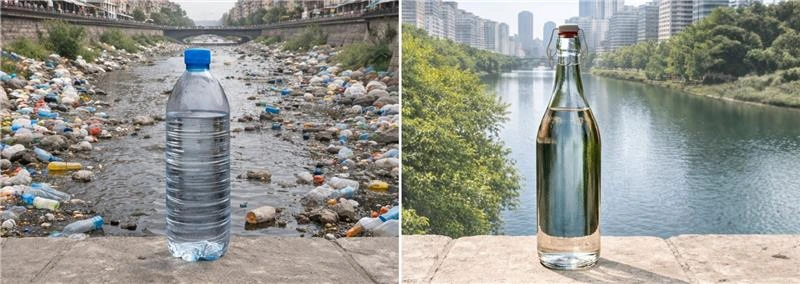
Walk down any street in India, whether it’s Mumbai’s bustling markets, Delhi’s industrial hubs, or coastal towns like Kochi, and you will notice one thing everywhere: plastic.
Plastic bottles, pouches, wrappers, bags, single-use, disposable, and accumulating at a pace that has far outstripped our ability to manage them. What was once a symbol of convenience has now become one of the nation’s most pressing environmental threats.
As India’s economy grows and consumption rises, packaging waste, especially plastic waste, has reached alarming proportions. And in the middle of this crisis lies an opportunity: a shift toward safer, cleaner, and more sustainable materials. Leading that shift is glass packaging, an age-old material making a powerful comeback in modern India.
India’s Plastic Problem: A Crisis in Numbers
India’s consumption of nearly 22 million tonnes of plastic every year makes it one of the world’s largest users. 62% of this volume is packaging alone, which is well above global averages.
Despite recycling policies and public awareness campaigns, the sad fact is:
- Only 13% of plastic waste in India is effectively recycled.
- A larger part of the country’s recycling is undertaken by informal, unregulated systems.
- A large part of the plastic ends up in landfills, drains, rivers, and oceans.
- Burning of plastic waste is pretty common, adding to pollution as it releases carcinogens such as dioxins and furans.
The environmental consequences are devastating. Beaches buried under waste, rivers choked with plastic bags, cows consuming plastic while foraging are no longer isolated scenes but everyday realities.
Plastic pollution is no longer just an environmental hazard but a public health crisis, as it is today affecting air quality, water safety, soil fertility, and food systems.
Why Traditional Recycling Isn’t Enough
Recycling has long been promoted as the answer to plastic pollution, but the truth is far more complex.
Even when plastic is recycled, it rarely becomes the same product again. It downcycles into lower-grade material until it becomes waste that cannot be reused. Many categories of plastic are difficult or uneconomical to recycle, especially multilayer packaging used in food and FMCG products.
Global data reveals a startling truth:
Less than 9% of all plastic ever produced has been recycled effectively.
This means that most plastic continues to exist, somewhere in a landfill, floating in water bodies, or breaking down into harmful microplastics.
Recycling helps, but it will never solve the problem at the root. India needs packaging solutions that are not dependent on energy-intensive recycling systems. This is where glass packaging stands apart.
The Environmental Costs of Plastic
Plastic’s impact extends beyond the visible waste.
- Climate Impact
Making plastic uses a lot of fossil fuels. Its production, transport, and disposal all release greenhouse gases that add to global warming. Also, much of the plastic waste is single-use, so it cannot be recycled - Soil & Water Contamination
If not recycled, plastic slowly breaks down, it releases chemicals into the soil and groundwater. These toxic substances enter the food chain through crops, drinking water, meat, and even sea salt. - Microplastics Everywhere
Microplastics have been found in rainwater, human blood, and even breast milk. Their long-term impact on human health remains unknown but is deeply concerning. - Threat to Wildlife & Ecosystems
Fish, birds, and livestock frequently ingest plastic, mistaking it for food. The consequences are often fatal. Plastic also disrupts marine ecosystems and damages biodiversity.
These environmental and health costs are far higher than the savings we make in choosing plastic packaging.
Why The Need of the Future is Glass Packaging
As environmental concerns rise and climate change plays havoc, policymakers are pushed to make brands and consumers rethink packaging choices. Glass packaging is emerging as a clear, compelling alternative. One that is safe, circular, and aligned with India’s sustainability goals.
- Pure, Natural, and Chemically Inert
Glass is made from natural materials, sand, limestone, and soda ash. It does not leach chemicals, absorb odours, or react with its contents, making it a perfect choice to package
- Food & beverages
- Spices & condiments
- Cosmetics & skincare
- Pharmaceuticals
- Ayurvedic products
In a world increasingly concerned about toxins, purity matters.
- 100% Reusable & Infinitely Recyclable
Glass packaging is made of natural materials, making it 100% recyclable. It is endlessly recyclable, without loss of quality.
While plastic degrades with every recycling cycle, glass retains its integrity. Recycled glass (cullet) also requires less energy to re-melt, reducing carbon emissions.
Even if glass is not recycled, it breaks down into natural minerals and does not harm the environment.
- India’s Policy Direction Driving the Change
India’s bans on single-use plastic and stricter EPR (Extended Producer Responsibility) regulations are driving mainstream businesses to adopt sustainable materials.
Glass packaging helps brands follow regulations, prepare for the future, and act responsibly toward the environment.
- Higher Consumer Trust and Brand Value
Indian consumers, especially millennials and Gen Z, prefer brands that show they care about the environment and use sustainable materials.
Glass packaging conveys:
- Premium quality
- Trust
- Transparency
- Long-term value
For brands in F&B, cosmetic, D2C, and artisanal spaces, glass offers both functional and branding advantages.
Why Choosing Glass Makes for a Business Case
Glass packaging is making a comeback across sectors ranging from cold-pressed juice brands to spice manufacturers, cosmetic companies, and gourmet FMCG startups.
In addition to being seen as an ecologically responsible company, the organisations see benefits in improved shelf appeal and customer trust. The surerity tht the contents in the bottle will stay unaltered. It ensures product purity and taste. Gain premium positioning and highlight their commitment to the environment by offering refill and return systems, a trend that is gaining popularity.
Sustainability is no longer a trend; it is a competitive advantage.
Challenges to Scaling Glass Packaging, And the Opportunities Ahead
Weight and fragility are the two negatives that glass packaging battles with. this frther leads to increased costs in transportation, and the waste quotient goes up.
Glass packaging manufacturers are conscious of this and have spent R&D dollars to come up with
- Lightweight glass technology
- Stronger, break-resistant formulations
- Improved carton makeup to reduce damage during transportation
- Localised supply chains to reduce costs
- Refill/return ecosystems
As demand increases, economies of scale will make glass even more accessible and cost-effective for brands across India.
Conclusion: A Cleaner India Begins With Smarter Packaging
One cannot argue the role of plastic pollution in India’s environment. The cost of the same today is being paid by our ecosystems, our cities, and even our health.
Glass packaging offers a real solution: natural, safe, reusable, recyclable, and future-proof.
For Indian businesses looking to strengthen their brand, comply with sustainability norms, and contribute to a cleaner tomorrow, switching to glass is more than an alternative.
It is a responsibility—and an opportunity.